
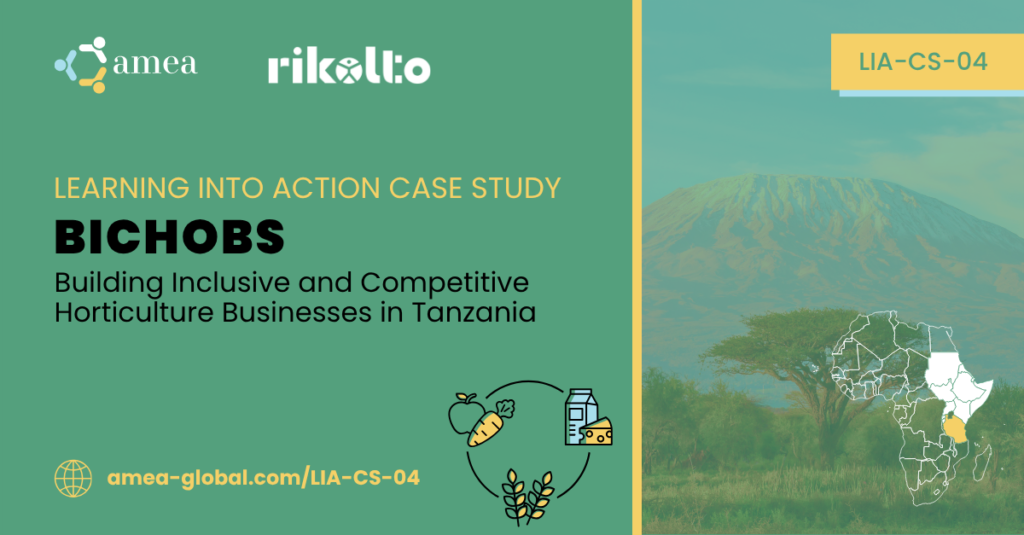
Entre 2020 et 2024, Rikolto a mis en œuvre le projet BICHOBS (Building Inclusive and Competitive Horticulture Businesses) dans les Hautes Terres du Sud de la Tanzanie, dans le cadre du programme AGRI-CONNECT de l'UE doté de 100 millions d'euros. S'appuyant sur l'approche iCRA des clusters agroalimentaires, les évaluations SCOPEinsight, des plateformes multipartites et des subventions de contrepartie, le projet a soutenu 104 clusters de production et a permis à près de 28 400 agriculteurs d'accéder aux marchés, au financement et aux services de développement commercial.
L'étude de cas « Learning into Action » de l'AMEA évalue les résultats et tire des enseignements pour les processus de la feuille de route nationale du BDS et les futurs investissements dans les PME agricoles.
Nous utilisons des cookies sur notre site web pour vous offrir une expérience optimale en mémorisant vos préférences et vos visites répétées. En cliquant sur « Accepter tout », vous consentez à l'utilisation de tous les cookies. Vous pouvez toutefois accéder aux « Paramètres des cookies » pour exercer votre consentement.