
What does it take to move farmer organizations from passive aid recipients to active drivers of their own agricultural economies? In Benin, PASDeR 3 has spent five years finding out – and the results offer a compelling model for the wider sector.
The Rural Development Sector Support Programme, Phase 3 (PASDeR 3), funded by Swiss Cooperation (SDC) and implemented by the Swisscontact-LARES consortium, set out to do something ambitious: transform agricultural unions (PSOs) into genuine business development service (BDS) providers for smallholder family farms across four departments in northern Benin.
The latest case study in AMEA’s Learning into Action (LiA) series documents what happened between 2020 and 2025 – and what it means for scaling BDS-led approaches across West Africa.
Over five years, PASDeR 3 supported nearly 49,000 smallholder family farms (30% led by women), generated USD 43.2 million in additional revenue, and created over 70,600 full-time equivalent jobs. The average cost per farm supported was CHF 230, with an overall efficiency index of 0.81 — a solid return on a complex, multi-actor intervention.
AMEA’s LiA analysis went deeper, applying the standardized AMEA BDS Economics Tool to a focused sample of eight enterprises across the rice, cassava, livestock, and mango value chains. For every dollar invested in BDS support, the median enterprise generated USD 0.99 in additional revenue, with a mean return of USD 1.06. Job creation was positive across the board, though concentrated among the highest performers.
Beyond the headline figures, PASDeR 3 achieved something structural: it moved local organizations away from a subsidy-dependent model toward one where they manage infrastructure, deliver services, and connect farmers to markets. Agricultural unions that once waited for external support are now coordinating processing units, storage facilities, and livestock markets — and increasingly charging for it.
This transition is uneven and still incomplete. Internal co-financing contributions from supported enterprises remained below 3% of total BDS costs, and donor dependence is real. But PSOs collectively mobilized over CHF 300,000 in internal resources, and third-party contributions reached as high as 31.22% in some livestock organizations – evidence that leverage is possible when ecosystem relationships are strong.
The LIA analysis surfaces four clear lessons for practitioners and investors:
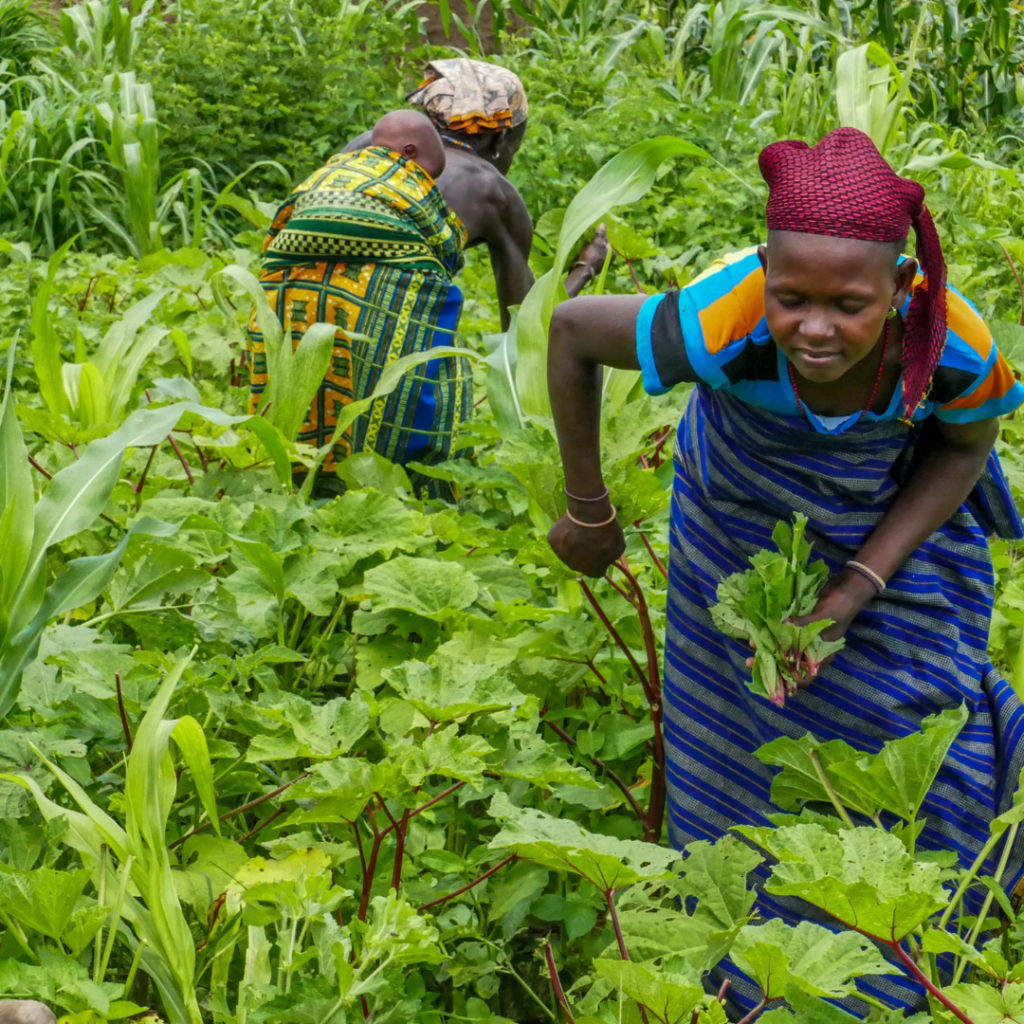
Countries across the sub-region — including Togo, Senegal, and Côte d’Ivoire — have expressed interest in similar OSP-based BDS approaches. PASDeR 3 offers a tested reference model for cross-country learning within the AMEA network and its BDS roadmap processes in West Africa.
The case confirms what AMEA has long argued: professionalizing rural organizations and embedding BDS within local market systems are powerful levers for building agricultural systems that are more inclusive, more competitive, and more resilient. Getting there requires patience, ecosystem thinking, and a willingness to move beyond project-by-project financing.
Read the full LIA-CS-06 case study on the AMEA website. This case study is part of AMEA’s Learning into Action series, which documents and analyses BDS approaches from across the AMEA network to build a shared evidence base for the sector.
We use cookies on our website to give you the most relevant experience by remembering your preferences and repeat visits. By clicking “Accept All”, you consent to the use of ALL the cookies. However, you may visit "Cookie Settings" to provide a controlled consent.