
Comment le PASDeR 3 transforme les organisations socio-professionnelles au Bénin
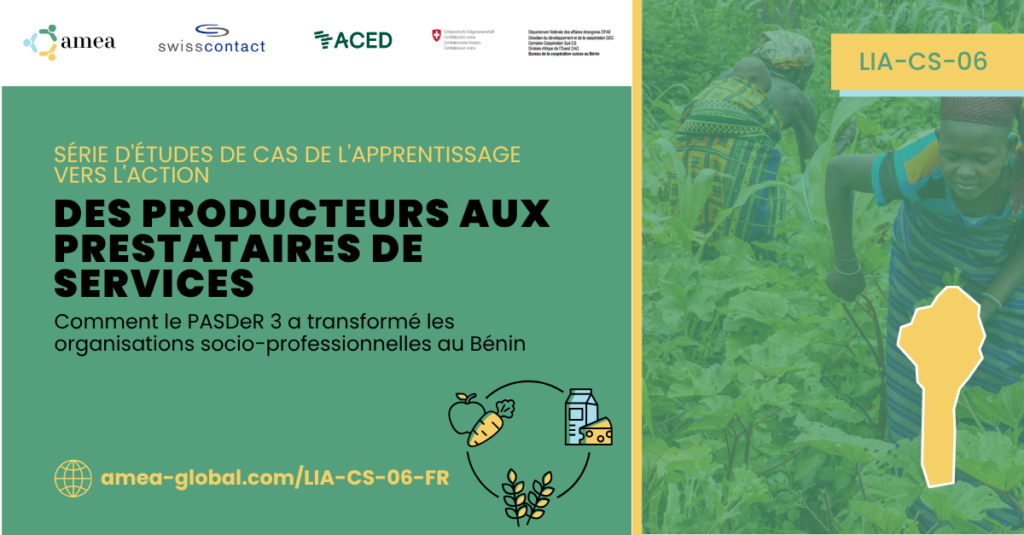
Qu’est-ce qui permet aux organisations paysannes de passer du statut de bénéficiaires passifs à celui d’acteurs moteurs de leur propre développement agricole ? Au Bénin, le PASDeR 3 a consacré cinq ans à répondre à cette question. Sur cette période, le programme a soutenu près de 49 000 exploitations familiales paysannes, généré l’équivalent de 43,2 millions USD de revenus supplémentaires et créé plus de 70 600 emplois équivalents temps plein — tout en faisant évoluer les organisations socio-professionnelles de bénéficiaires à prestataires de BDS. La dernière étude de cas de la série Apprentissage vers l’Action de l’AMEA documente ce qui a fonctionné, ce qui doit encore progresser, et ce que cela signifie pour la mise à l’échelle des approches BDS en Afrique de l’Ouest.
How PASDeR 3 has transformed agricultural unions in Benin
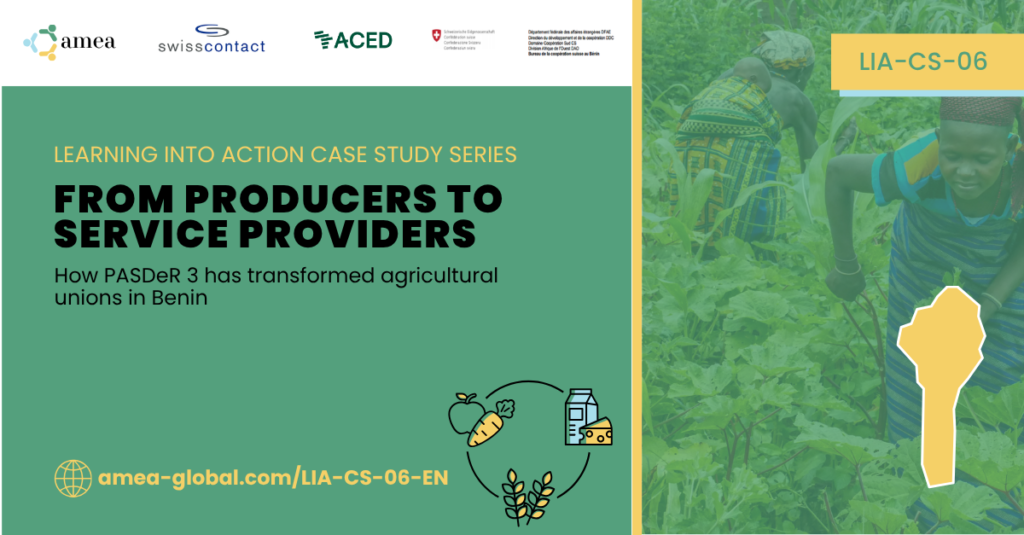
What does it take to move farmer organizations from passive aid recipients to active drivers of their own agricultural economies? In Benin, PASDeR 3 has spent five years finding out. Over that period, the programme supported nearly 49,000 smallholder family farms, generated USD 43.2 million in additional revenue, and created more than 70,600 full-time equivalent jobs — while shifting agricultural unions from beneficiaries to BDS providers. The latest case study in AMEA’s Learning into Action series documents what worked, what still needs attention, and what it means for scaling BDS-led approaches across West Africa.
NAFPO Grameen India Gender Responsive LIA Case Study
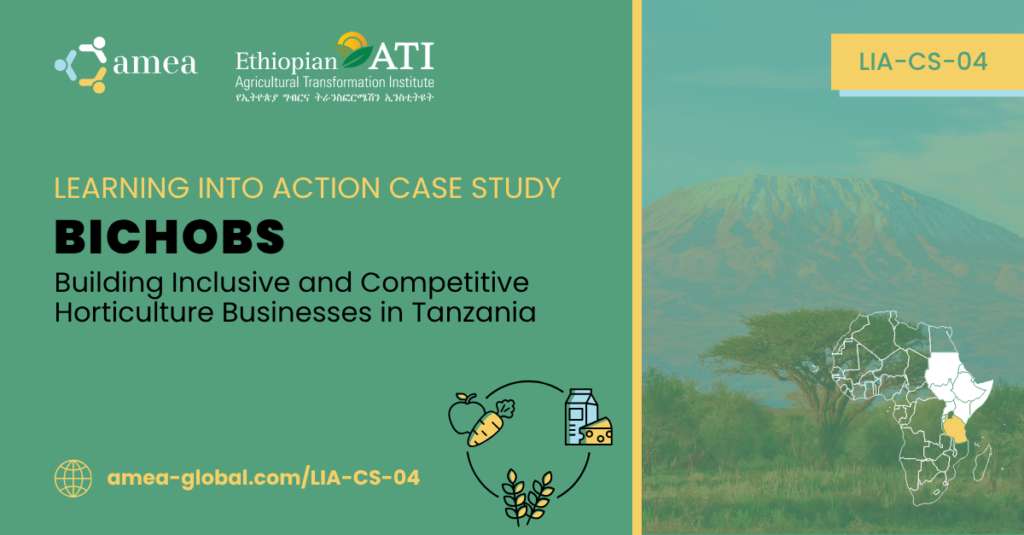
Rikolto’s BICHOBS project reached nearly 28,400 farmers across Tanzania’s Southern Highlands. AMEA’s latest Learning into Action case study unpacks what worked, what didn’t, and what it means for scaling BDS market systems.
BICHOBS Tanzania Horticulture LIA Case Study
Rikolto’s BICHOBS project reached nearly 28,400 farmers across Tanzania’s Southern Highlands. AMEA’s latest Learning into Action case study unpacks what worked, what didn’t, and what it means for scaling BDS market systems.
The 2SCALE Ethiopia KMFCU Public-private partnership
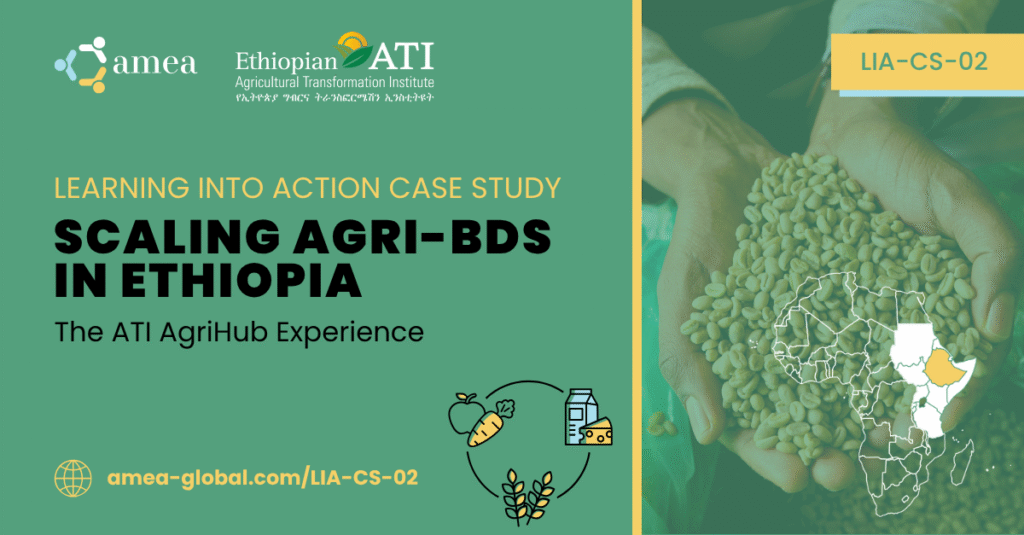
Over three years, Ethiopia’s Agricultural Transformation Institute (ATI) achieved a breakthrough in business development services delivery—creating a tiered BDS model that generated exceptional returns while reaching over 1,200 agri-SMEs across four regions and twelve value chains. With an 18:1 ROI on revenue increases and 84:1 ROI on capital mobilized, the ATI AgriHub program demonstrates how strategic segmentation and diagnostic-led approaches can revolutionize SME support systems, delivering ETB 3.16 billion in finance access while creating sustainable employment across Ethiopia’s agricultural sector.
ATI Agrihub – Scaling Agri-BDS in Ethiopia
Over three years, Ethiopia’s Agricultural Transformation Institute (ATI) achieved a breakthrough in business development services delivery—creating a tiered BDS model that generated exceptional returns while reaching over 1,200 agri-SMEs across four regions and twelve value chains. With an 18:1 ROI on revenue increases and 84:1 ROI on capital mobilized, the ATI AgriHub program demonstrates how strategic segmentation and diagnostic-led approaches can revolutionize SME support systems, delivering ETB 3.16 billion in finance access while creating sustainable employment across Ethiopia’s agricultural sector.
Scaling Agri-BDS in the Ethiopian Barley Value Chain (Case Study)

A new AMEA-supported case study reveals how innovative approaches can unlock over $4 million in agricultural credit while achieving 95% repayment rates.
Agriculture in West Africa faces a persistent challenge: smallholder farmers struggle to access the financial services they need to grow their businesses and improve their livelihoods. In Benin, this reality has kept countless producers trapped in cycles of low productivity and limited market access.
Catalyzing Agricultural Growth in Benin (case study)
A new AMEA-supported case study reveals how innovative approaches can unlock over $4 million in agricultural credit while achieving 95% repayment rates.
Agriculture in West Africa faces a persistent challenge: smallholder farmers struggle to access the financial services they need to grow their businesses and improve their livelihoods. In Benin, this reality has kept countless producers trapped in cycles of low productivity and limited market access.
Veggies 4 Planet and People In Kenya and Ethopia – Case Study
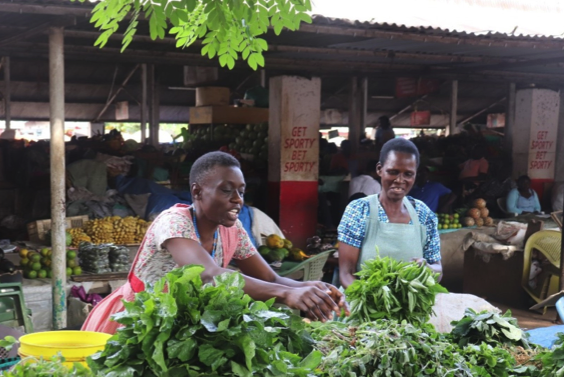
This case study analyzes the roles played by aggregators within ABCs and how 2SCALE supported small producers and micro-entrepreneurs in the Benin pineapple value chain to have a balance of power with value chain actors.
Programme Agri-business cluster Benin (case study French)
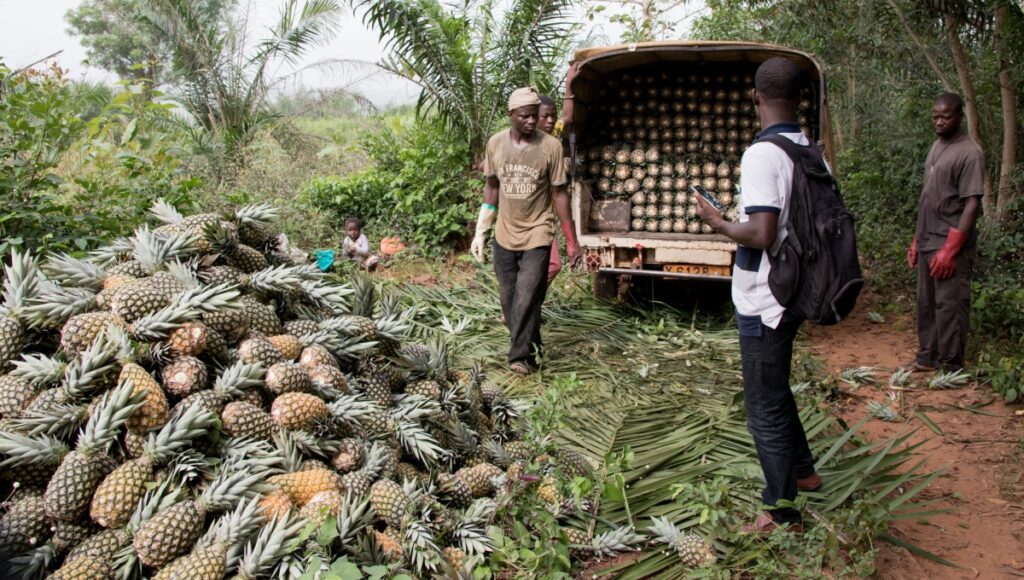
This case study analyzes the roles played by aggregators within ABCs and how 2SCALE supported small producers and micro-entrepreneurs in the Benin pineapple value chain to have a balance of power with value chain actors.